
Do you run a food delivery business that is doing well or not and you are wondering how to expand sales globally or within your community? Are you not quite sure about breaking into e-commerce because of security concerns, the duplicity of ideas, or simply a lack of understanding about that element of business?
If you are a food delivery vendor or thinking of starting one soon and wondering if that is where your clients are, there is never a better time to gain a better understanding.

The first question is, what is an “E-Commerce platform”?
This a platform that allows you to build an online store and run a business online. It gives you the tools to create and manage your site, including products and day-to-day operations helping you reach a wider audience for your growing or fast expanding business.
Why an “E-Commerce platform?
Building your business in a store only is like making your business a brick and mortar setup which is bound by location while the whole world is technically out there waiting to hear about what you can offer, even if you think your business needs to stay local due to your type ok delicacies, how are you bringing your business to a wider audience for an increase in profit.
More people are ordering food delicacies online because the Internet offers a smorgasbord of specialties to suit any taste and budget. Consumers can order food from their smartphones, call local vendors for deliveries, and find dishes that average supermarkets or restaurants just do not sell. As a food vendor, you are in a unique position to make a profit while building your brand by selling signature food items from your own eCommerce store.
Benefits
1. Superior customer experience
With brick-and-mortar stores, customers will feel frustrated to discover a single missing item they have forgotten to buy as it means a second time of driving, picking, and queueing. When purchasing online, they can edit an order before it has been dispatched. A possibility to reorder for customers to place orders faster.
Smart upselling is done when the system reminds customers of products from previous orders that they might have forgotten to include this time.
2. Competition

It is actually important that you learn about e-commerce as soon as you can because according to proven facts plenty of people will continue to shop online, and this market is still far growing especially ( mobile e-commerce) which has grown by 300% over the last few years.
3. Reducing Costs
E-commerce tends to carry far lower costs than brick-and-mortar setups, adding an online component to your existing business does not need to be a high-risk investment and in fact, in most cases would be a far better choice than opening another storefront if that’s something that you feel you could easily lose money on.
4. Multi-store Functionality
Enterprise eCommerce platforms feature multi-store functionality allowing businesses to create and manage multiple web stores via a single administration panel, you can have stores that can service different localities and locations.
5. Social Distancing
Selling such a vital asset as food, you must listen to customer demands even more carefully. For example, what we see now is an offline retail business feeling extremely vulnerable in the COVID pandemic. People avoid crowds, leave their houses much less, and, therefore, shop online whenever they can. In this situation, if you do not offer an online sales channel, you literally have your food retail business in danger.
6. Product Presentation
For informed purchasing decisions, customers will appreciate high-quality media and comprehensive product information (composition, ingredients e.t.c). Besides, they can go through product reviews and compare prices while online shopping. A possibility to diversify product descriptions can become one of the competitive advantages of e-commerce over brick-and-mortar businesses. An eCommerce platform allows creating custom sets of attributes for each product type so that customers get the fullest product information. For example, A dish like fried rice can have an attribute, The food it best pairs with. What is more, retailers can group related products and possibly offer a perk in the form of an overall price reduction.
7. Payment
Both payment and prepayment after the order have been placed online and payment upon delivery is available for online food retailers. While the process is clear with payment upon delivery (a courier can accept cash or a credit card), a prepayment option has some specifics for food eCommerce.
As far as a food order can contain products sold by weight, customers can quantify an exact order cost at the stage of order placement hence prepayment can be made.
8.Decreased overhead expense
With a number of similar expenditures for online and brick-and-mortar businesses (e.g.for a store), online food vendors save on the overhead costs associated with renting retail premises (the prices of which grow in proportion to a location’s convenience) and customer-facing staff. Instead, they can invest in eCommerce development and marketing with E-commerce.
9.Personalized customer experience
Online vendors can develop more personal communication with customers – even if this communication takes place online. By tracking and analyzing customer behavior, they get to know who their customers are and what engagement they expect.

Summary
Success in an online food business largely depends on what benefits vendors offer to customers to beat a possibility to hand-pick products. In short, their competitive advantage is customer experience where they can offer a personalized approach, a time-saving purchasing process, and convenient delivery options.
We design and implement effective food eCommerce solutions. Here are our knowledge and expertise one click away.
For further inquiries contact via,
Email: Info@optisoft.ng
Call or Whatsapp:+234 708 895 7111

Suite 808, 8th Floor, Madilas Mall, No 96/102, Broad Street, Lagos Island, Lagos, Nigeria.

An Information Technology (IT) expert, Mr Andrew Ughonu, on Monday said that business automation could help achieve the social distancing precaution to curb the spread of coronavirus.
Ughonu, Chief Executive Officer, Optisoft Technology, made this known in an interview with the News Agency of Nigeria in Lagos
NAN reports that one of the precautions listed by health and safety experts to curb the spread of the virus is social distancing.
Ughonu said that business automation did not necessarily implied lay-off of workers “but promotes accountability’’.
Business automation actually creates different jobs because new skills will be required but ultimately there is efficiency in high output. Technology is an enabler of business .This means any member of the management staff can from his desk get a full report on how the business is fairing. This process manages business flow from end to end, starting from staff clock-in, accounting management, sales and inventory management. It also include vendor management, project management, budget and expense monitoring, files and documents management,’’ he said.
According to him, this also helps business continuity as the current lockdown does not stop business from running functions like secured document signing while approvals can be done remotely which is also secured.
“Meetings can be done online without any physical presence. This also helps in following government rules on social distancing while learning can also be done remotely and online.
Business automation enhances businesses by means of accountability and does not encourage lay-off of workers. No matter the level of automation, you will still need humans to operate those things. The need for business automation is to enhance sales and productivity. It also makes one accountable.

“Business automation also brings convenience and security,’’ Ughonu said.
He explained that every business required a lot of effort to be managed efficiently. He added that several complex processes needed to get assimilated in their functions and integration of those processes led to the development of hitch-free operations.
According to him, business automation refers to new digital functionalities that can complete processes with ease. All you need to do as a business owner is acquire a complete Enterprise Resource Planning (ERP) solution which will be integrated into Web applications or Mobile apps and it will help you in your daily transactions.
“Business Automation (BA), also known as business process automation or digital transformation is the technology-enabled automation of complex business processes,” Ughonu said.
The expert noted that keying into the idea of business automation could help save people from contracting the deadly coronavirus.
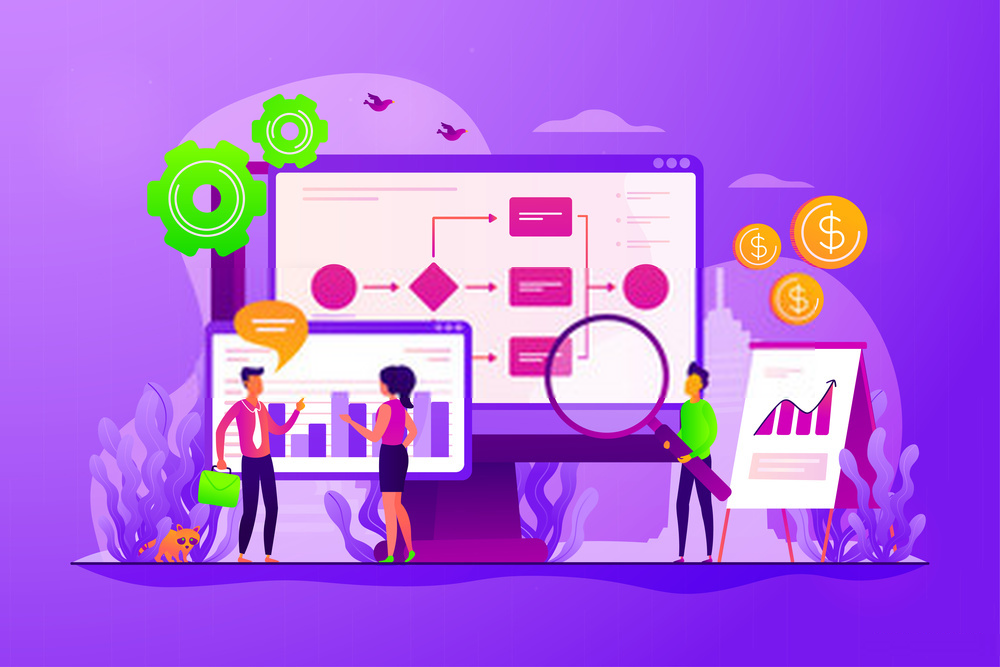
Every business requires a lot of effort to be run efficiently. Several complex processes need to get assimilated in their functions and integration of those processes leads to the development of hitch-free operations. There are two types of processes in business operations; one, the repetitive, mundane jobs that only need practice and the latest information, and secondly, the jobs that need actual human intervention to get completed. The good news is that there are now digital functionalities that can complete these processes by ease. This process is called Business Automation
What is Business Automation?
Business automation (BA), also known as business process automation an or digital transformation is the technology-enabled automation of complex business processes. it consists of integrating applications, restructuring labor resources, and using software applications throughout the organization. BA’s can be implemented in a number of business areas including marketing, sales, and workflow. Toolsets vary in sophistication, but there is an increasing trend towards the use of artificial intelligence technologies that can understand natural language and unstructured data sets, interact with human beings, and adapt to new types of problems without human-guided training.
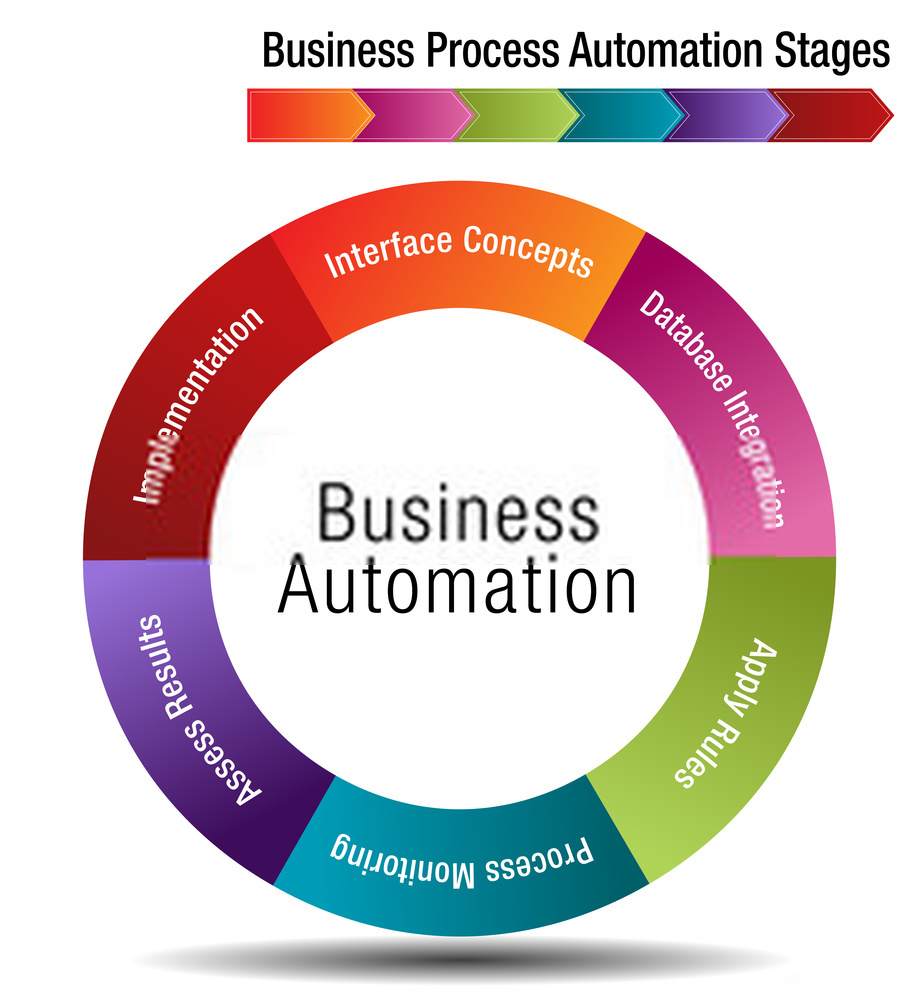
Stages in Business Automation
Why should you Automate your Business
Here are some compelling reasons to automate your business processes.
- Stepping stone to digital transformation: Digital transformation can seem like a lofty overwhelming goal to organizations that aren’t on that path. Business process automation can be a stepping-stone to adopting that culture of continuous transformation. You can start with a few processes that are clearly in need of course correction and gradually work your way up.
- Clarity: Automation necessitates a certain amount of clarity about the process right at the designing stage. If you don’t know the tasks involved and the people responsible for running the process, you can’t design and automate the workflow accurately. Further, process mapping can provide clarity to all employees and serve as a training resource as well. The insights you gain from analyzing an automated process can clearly show you the gap between your process as is and as it should ideally be.
- Streamlined processes: One of the great outcomes of the process automation system is streamlined processes. Clear accountability, customizable notifications, valuable insights, and faster turnaround times make it easier to eliminate wasteful activities and focus on enhancing tasks that add value.
- Compliance: With business process automation, every detail of a particular process is recorded. This information can be presented to demonstrate compliance during audits.
- Standardization of operations: When you automate a business process, you can expect a consistent standard of outcomes every time. Standardization helps to position your organization as reliable, which in turn can help increase your customer base.
- Customer satisfaction: Customer satisfaction is a key differentiator in any industry. Focusing on process and operational excellence helps you exceed customer expectations with ease. When you consistently meet promised standards, customers are more likely to develop a preference for your company.